Dados Negros Centre welcomes two artists in residence during the month of July 2016 by procuring a place to research, create and reflect, facilitating the development of the creative process of their projects, which will be evaluated prior to their stay in the center by AIR a public call open until April 26, 2016.
This program is open to international artists, linked to any artistic discipline and offers a maximum of 2 places with a stay of 1 month.
Check out the rules of the open call AIR Dados Negros 2016
http://www.dadosnegros.com/download/air/Dados_Negros_AIR_2016_EN.pdf
This program is open to international artists, linked to any artistic discipline and offers a maximum of 2 places with a stay of 1 month.
Check out the rules of the open call AIR Dados Negros 2016
http://www.dadosnegros.com/download/air/Dados_Negros_AIR_2016_EN.pdf

'Dados Negros' poem by Dionisio Cañas

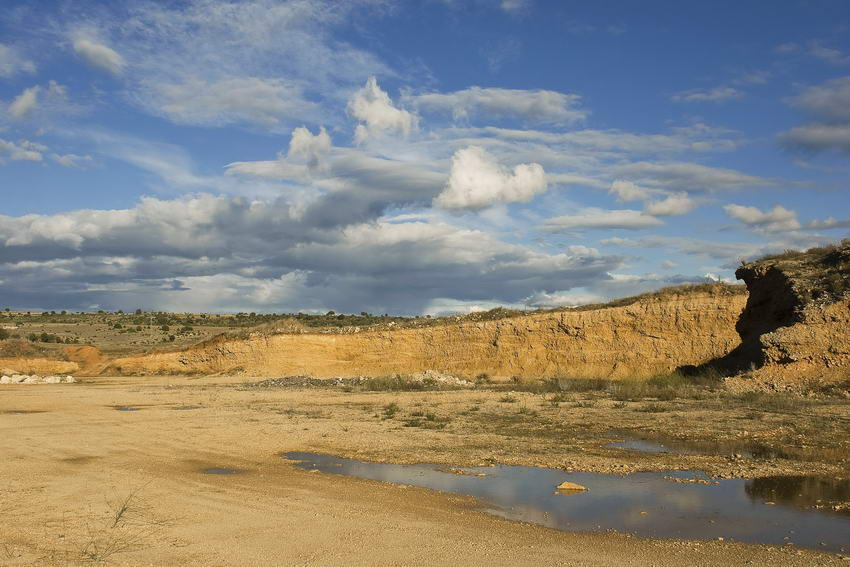
Landscape surrounding Centro Dados Negros


Night in Centro Dados Negros
Residency Programme Rules AIR 2016
The Pepe Buitrago Foundation organises its first Residency Fellowship for Artists.
Dados Negros AIR 2016 is a programme whose aim is to offer support to both Spanish and international artists. An artist is defined as a person whose work is related to the creation and production of contemporary art concepts, and who wishes to develop a research or creative project.
Duration: One month at the facilities of the ‘Dados Negros’ Holography and Art Centre in Villanueva de los Infantes, Ciudad Real.
Date: July 2016.
Grant: Each Residency Fellowship is accompanied by a grant of €300.
Accommodation: The ‘Dados Negros’ Centre will provide all the selected artists with a double room with a private bathroom, a common kitchen-dining room area and a workspace shared with other Residency Fellowship artists.
Workspaces: The schedules for the workspaces and the spaces themselves will be agreed upon depending on each project’s needs and the availability of the Centre’s spaces.
Expenses to be paid for by the artists themselves: Travel, food allowances, medical coverage/accident insurance.
Agreement: The artists selected agree to offer a training activity for the local community that is related to their respective Residency projects. This training activity can be in the form of a free lecture for the attending public or an intensive workshop – for which the artist will receive 70% of the fees paid for by the attending participants. (The remaining 30% will go to the Foundation to cover expenses). If artists choose the training activity, they must send detailed information about it, together with their Residency project.
The obligations of the beneficiaries
• To fully fulfil the period for which their Residency Fellowship was granted.
• If the artist cannot undertake the residency on the dates allocated, they must give at least thirty (30) days written notice.
• The artists authorise the Pepe Buitrago Foundation to copy, fully or in part, and only for purposes of the promotion and diffusion of the Programme, the artworks created during the Residency Fellowship. In addition, they shall mention in all works and initiatives resulting from their Residency period their relationship with ‘Dados Negros’ and the Pepe Buitrago Foundation the statement: “With the support of ‘Dados Negros’ Holography and Art Centre. Pepe Buitrago Foundation”.
• The artists must ensure the maintenance of the spaces and materials and regularly attend the Centre as established. Noncompliance of said maintenance, as well as any absence that could jeopardise the development of the project in the period established will result in a severance of the relationship with the Centre.
• Artists must take out their own Accident Insurance to cover any personal harm suffered during their stay at the Centre. Important: This Residency Fellowship does not include medical coverage. Each resident artist must personally take out medical coverage valid for their period of Residency at ‘Dados Negros’. The Pepe Buitrago Foundation and the ‘Dados Negros’ Centre is not liable for medical expenses.
• The artists agree to return the space used in the same condition they initially found it in.
• The artists selected agree to mention the support received from the ‘Dados Negros’ Holography and Art Centre and the Pepe Buitrago Foundation in all public communications regarding the project developed during their Residency Programme. The ‘Dados Negros’ Holography and Art Centre and the Pepe Buitrago Foundation are not liable for any damage or loss that the materials and artworks created could suffer as a result of any type kind of incidence (fire, theft, flooding, etc.).
Selection: The selection of artists will be carried out by the Dados Negros Centre’s Programmes Committee taking into account the artistic quality and creativeness of the applicants’ works, their training and/or professional path, the nature and feasibility of their proposals, and the projects’ suitability to the resources that the ‘Dados Negros’ Centre can offer.
Decision: The artists selected will be informed of the decision on 30 May 2016, and their names will be posted on the Foundation’s website, http://www.dadosnegros.com.
Applications:
To apply for a Residency Fellowship, the following documents must be sent:
1) Application form. Attached here, and filled out with your personal details
2) Copy of id Card/Resident’s Card or Passport
3) Proposal or project to be carried out. Title, short description, work plan, personal reasons for applying. Photographs or sketches of the planned work
4) Residency project and a brief cv
5) Portfolio of previous work (optional)
For documents 3, 4 and 5, only pdf files (up to 8 Mb) will be accepted. Projects can be sent either in Spanish or English. Applications with incomplete information will be considered invalid.
Deadline for receipt of applications: 26 April 2016
Send your application:
By email: contacto@dadosnegros.com
By post:
Centro Dados Negros
C/ Fuente Quintana, 3
13320 Villanueva de los Infantes
Ciudad Real - Spain
Your participation in this selection process involves your full acceptance of these rules, as well as that of the decision of the selection panel.
Should you need any further information, please email us at contacto@dadosnegros.com and write “2016 Artists Residency” in the subject line.
Complete rules and registration form at the following link:
http://www.dadosnegros.com/download/air/Dados_Negros_AIR_2016_EN.pdf